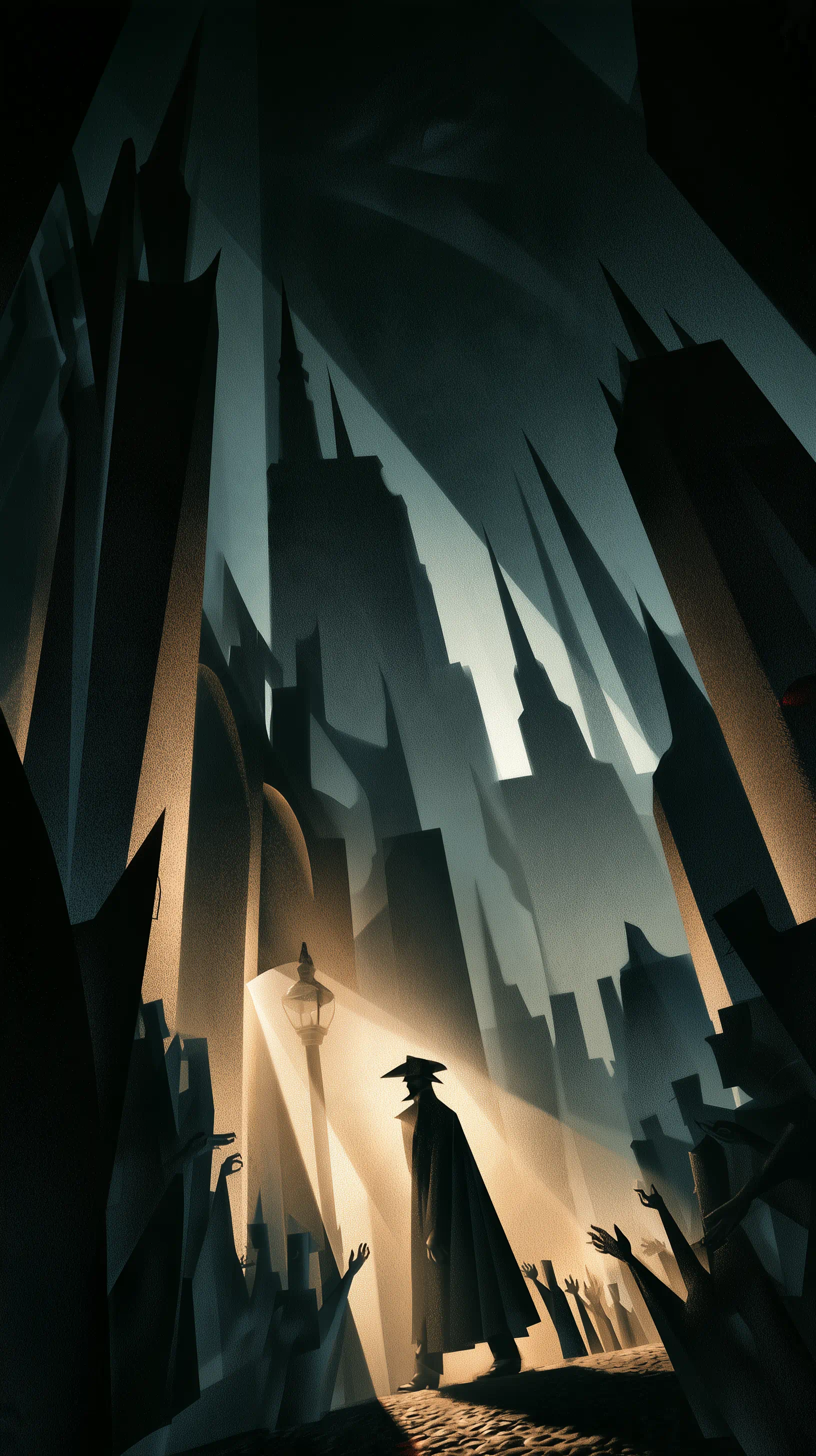
Horace Walpole spent twenty years turning a villa at Twickenham into a small Gothic castle — battlements, painted glass, pointed arches. On a morning in June 1764 he woke from a dream he would describe a year later to a friend: on the uppermost banister of a great staircase I saw a gigantic hand in armour
. He began writing that evening and finished, by his own account, in less than two months
. The Castle of Otranto appeared anonymously that Christmas. Without quite intending to, he had started a genre.
Walpole to William Cole, 9 March 1765For the next half-century the Gothic was among the most successful and least respectable fiction in English — turned out by the hundred, much of it by women and for women, from the circulating libraries. Reviewers wrote about it as an infection; Jane Austen built a comedy, Northanger Abbey, around a girl who has read too much Radcliffe. Its furniture barely changed: a house held by a false claim, a crime in the family’s past, a father or abbot with the keys, a body that will not stay decently dead. Writing in 1800, the Marquis de Sade thought the form the inevitable product of the revolutionary shocks which all of Europe has suffered
— that after the real Terror of the 1790s, only crypts and tyrant-fathers could still frighten a reader.
Sade, Idée sur les romans (1800)Ann Radcliffe, the decade’s most popular novelist, made the mode respectable by refusing to show much. Her ghosts always resolved into a servant, a draught, a trick of grief; the dread lived in the withholding. An essay found among her papers set out the distinction the genre would quarrel over for a century — terror, which expands the soul
, against horror, which contracts, freezes, and nearly annihilates
it. Matthew Lewis had already chosen horror in The Monk (1796), a book of rape, matricide and putrefaction; Radcliffe’s later novels read in part as an answer to him.
Radcliffe, “On the Supernatural in Poetry” (1826)In the wet, volcanic summer of 1816 the argument moved to a rented house on Lake Geneva. Byron had a book of German ghost stories and a proposal that everyone write one. Mary Godwin, eighteen, wrote Frankenstein: no ghost in it anywhere, the horror now a thing a man builds on a bench and cannot switch off. Byron’s physician John Polidori — the two did not get on — took a fragment Byron had abandoned and made The Vampyre, published three years later under Byron’s name. Polidori was dead, probably by his own hand, at twenty-five. One week, one house, and the two monsters that outlived everyone in the room.
America took delivery. Edgar Allan Poe read all of it, threw out the machinery and kept the effect — the single calculated jolt he said a tale should be built to produce. The Fall of the House of Usher (1839) folds the genre’s three fears — the tainted house, the sick body, the split mind — into one building that cracks and sinks. After Poe the Gothic had a method and a theory. What it lacked was a reason to leave the house.